
Every year on May 22, the global health community observes World Preeclampsia Day. This day is a critical reminder of a condition that remains one of the leading causes of severe maternal complications and mortality worldwide. The good news? With timely awareness and proactive prenatal care, the vast majority of cases can be managed safely.
In this article, we break down exactly what preeclampsia is, how it differs from regular high blood pressure during pregnancy, the warning signs you should never ignore, and why early diagnosis is a literal lifesaver.
What is preeclampsia?
Preeclampsia is a complex, multi-system medical disorder that typically develops after the 20th week of pregnancy (most frequently in the third trimester) or, in rare cases, during the postpartum period. It is characterized by a sudden spike in blood pressure combined with protein in the urine (proteinuria) or signs of damage to other organ systems, most notably the kidneys and liver.
Because it directly impacts the placenta, preeclampsia can restrict blood flow and nutrient delivery to the baby, making it a serious condition that requires strict medical supervision.
Gestational hypertension vs. preeclampsia vs. eclampsia
It is easy to confuse these terms, but clinically, they represent distinct stages and types of hypertensive disorders in pregnancy:
| Condition | Key Characteristics |
| Gestational Hypertension | High blood pressure that develops after week 20 of pregnancy without protein in the urine or other signs of organ damage. It typically resolves after delivery. |
| Preeclampsia | High blood pressure (equal to or greater than 140/90 mmHg) plus protein in the urine or blood test results indicating organ stress (like liver or kidney impairment). |
| Eclampsia | The severe, life-threatening progression of preeclampsia. It is defined by the onset of seizures or coma in a pregnant woman with preeclampsia, unrelated to other brain conditions. This is a critical medical emergency. |
Warning symptoms to watch for
Preeclampsia can be sneaky. In its early stages, it often causes no symptoms at all, which is why your doctor checks your blood pressure at every visit. However, as it progresses, your body will start sending clear red flags.
Emergency Signs. Go to the ER immediately if you experience:
- Severe, persistent headaches that don’t go away with standard acetaminophen (Tylenol).
- Visual disturbances, such as blurred vision, seeing flashing lights/spots, or extreme sensitivity to light.
- Sharp pain in the upper abdomen (usually under the ribs on the right side).
- Sudden, severe swelling (edema), particularly in your face, hands, and around your eyes.
- Rapid weight gain of more than 2 pounds (1 kg) in a single week.
- Sudden nausea or vomiting that begins in the second half of pregnancy.
How preeclampsia is diagnosed
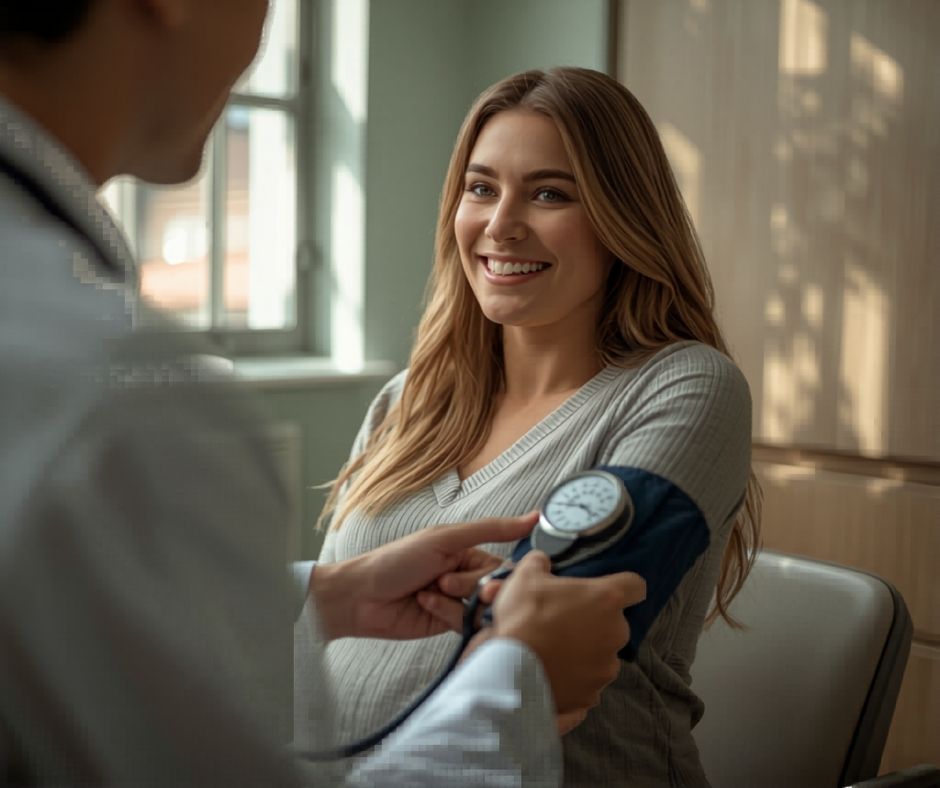
Catching preeclampsia early is the single most important factor in preventing severe complications. During your routine prenatal checkups, your healthcare provider will use several diagnostic tools:
Blood Pressure Monitoring: A reading of 140/90 mmHg or higher, taken on two separate occasions at least 4 hours apart.
Proteinuria Testing: A urine test (either a dipstick or a 24-hour urine collection) to check for abnormal protein levels.
Laboratory Blood Work: Tests to evaluate platelet counts, kidney function (creatinine), and liver enzymes.
Fetal Monitoring: An ultrasound with a Doppler study to measure blood flow to the placenta, alongside a non-stress test (NST) to ensure the baby is thriving.
Risk factors
While any pregnant woman can develop preeclampsia, the statistical risk increases significantly if you have any of the following factors:
- First-time pregnancy (primigravida).
- A personal or family history of preeclampsia.
- Chronic high blood pressure, diabetes, lupus, or kidney disease prior to getting pregnant.
- Carrying multiples (twins, triplets, or more).
- Maternal age (under 20 or over 35–40 years old).
- Obesity (a Body Mass Index of 30 or higher).
- Pregnancy achieved via in vitro fertilization (IVF).
Treatment and management
The only definitive cure for preeclampsia is the delivery of the baby and the placenta. However, the exact medical approach depends on how far along the pregnancy is and the severity of the condition:
- Mild to Moderate Cases: Managed with close monitoring (either at home or short-term hospitalization), relative rest, and pregnancy-safe antihypertensive medications. The goal is to safely get the pregnancy as close to 37 weeks as possible.
- Severe Cases: Immediate delivery (via induction or C-section) may be necessary to protect the life of both mother and baby, even if the baby is premature. In these cases, intravenous magnesium sulfate is administered to prevent seizures (eclampsia).
- Prevention: For high-risk patients, OB/GYNs frequently recommend a daily regimen of low-dose Aspirin (81 mg) and Calcium supplementation starting late in the first trimester.
How prenatal care reduces maternal mortality
Consistent prenatal care is your best defense against the dangerous complications of preeclampsia. When you attend your scheduled appointments, your medical team can catch a rising blood pressure trend long before it causes severe damage or noticeable symptoms.
Early detection gives doctors the time to plan a safe delivery timeline, administer preventive therapies, and stop the condition from escalating into eclampsia or the life-threatening HELLP Syndrome (a severe breakdown of red blood cells and liver function).
This World Preeclampsia Day, prioritize your health: never miss a prenatal checkup, and share this information to help protect other expectant mothers!
About Educar Med
Educar Med isn’t just about passing tests; it’s about rejecting clinical mediocrity. We are a community dedicated to training the new generation of physicians who think, examine with precision, and transform lives.
Keep raising your clinical standards. Follow Educar Med on social media: