
If there is a core topic tested repeatedly on Pharmacology and Internal Medicine exams (and encountered daily on clinical rotations), it is the GLP-1 receptor agonist class. Beyond the clinical spotlight, understanding their integrated endocrine and metabolic mechanisms is essential for board-level preparation. Here is the structured, high-yield summary designed for fast retention.
Mechanism of action: target tissues & physiology
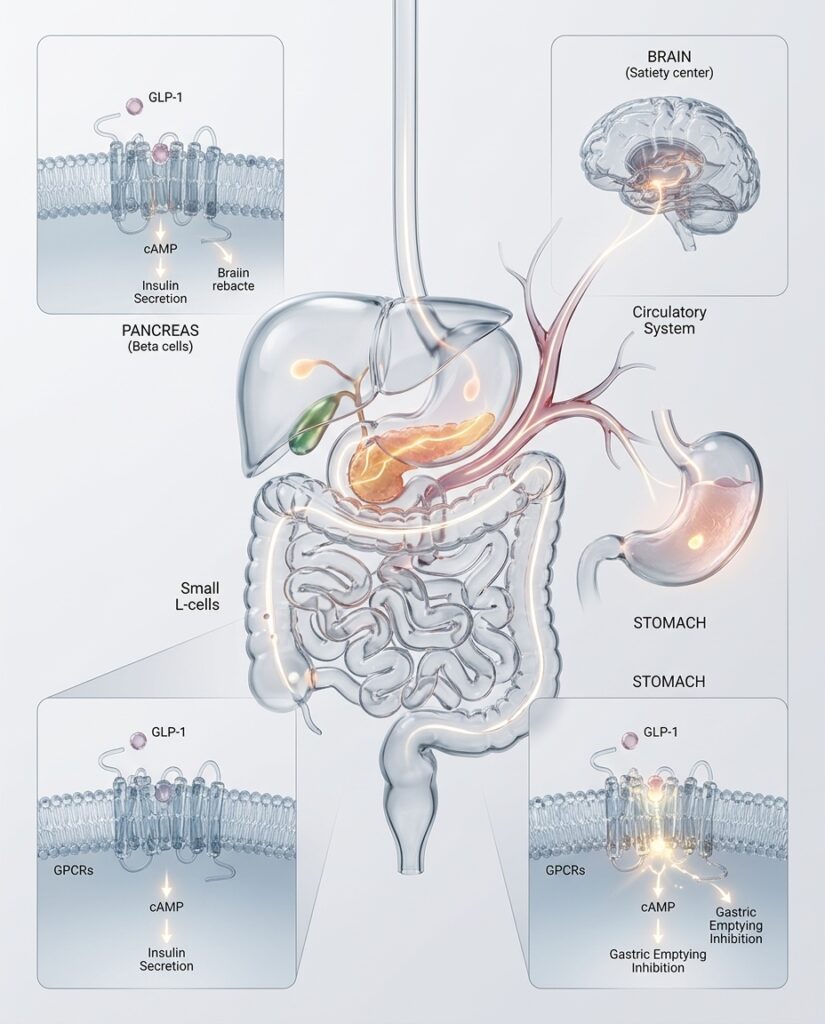
GLP-1 (Glucagon-Like Peptide-1) receptor agonists mimic endogenous incretin hormones by activating GLP-1 receptors (GLP-1R) across key systems:
- Pancreas: promotes glucose-dependent insulin secretion from beta cells and suppresses excessive postprandial glucagon release from alpha cells.
- Gastrointestinal Tract: slows gastric emptying, blunting rapid postprandial glucose surges.
- Central Nervous System (Hypothalamus): stimulates satiety pathways and decreases appetite regulation centers.
💡 High-Yield Exam Pearl: Because insulin secretion is strictly glucose-dependent, the intrinsic risk of hypoglycemia with GLP-1 RA monotherapy is minimal compared to insulin secretagogues (such as sulfonylureas).
Key class representatives
- Semaglutide (Ozempic / Wegovy / Rybelsus): extended half-life formulation available for weekly subcutaneous or daily oral dosing.
- Liraglutida (Victoza / Saxenda): daily subcutaneous administration.
- Dulaglutide (Trulicity): weekly subcutaneous injection with Fc-fusion design.
(Note: Tirzepatide is classified as a dual GLP-1/GIP receptor co-agonist, featuring distinct pharmacodynamics discussed in an upcoming module).
Approved clinical indications
Type 2 Diabetes Mellitus (T2D): glycemic management with proven cardiovascular and renal protective outcomes in high-risk cohorts.
Chronic Weight Management: indicated in adults with BMI ≥ 30 kg/m² (or ≥ 27 kg/m² in the presence of weight-related comorbidities).
Adverse effects & high-yield contraindications
- Gastrointestinal Distress: nausea, vomiting, early fullness, and constipation (most pronounced during initial titration).
- Pancreatitis Vigilance: caution in patients presenting with persistent abdominal pain.
- Key Black Box / Contraindications: personal or family history of Medullary Thyroid Carcinoma (MTC) or Multiple Endocrine Neoplasia syndrome type 2 (MEN 2).
Clinical application & takeaways
Mastering this pharmacological profile is essential for both examination performance and outpatient communication. As patients frequently inquire about incretin-based therapies, communicating evidence-based mechanisms with clinical clarity is an essential milestone in medical training.